

How to Resolve Legal Disputes in China Through Legal Channels?
China’s legal system is one of the most efficient in the world. Resolving legal disputes in China through legal channels is not as complicated as one might imagine; the key lies in choosing the right approach, gathering sufficient evidence, and seizing the right moment.
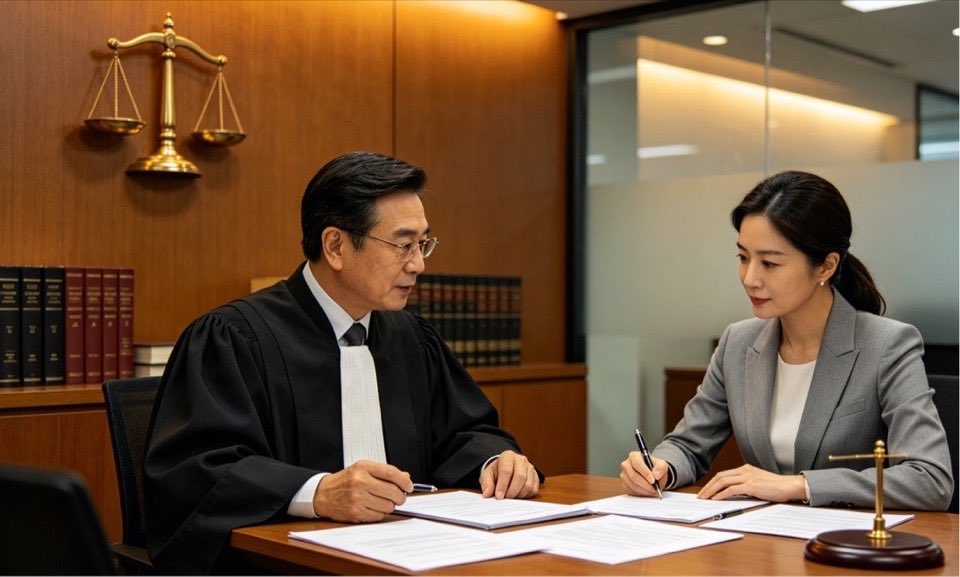
This article will systematically outline how to resolve legal disputes in China through legal channels, helping you clarify your approach and effectively protect your rights.
I. Court Litigation
When a legal dispute in China cannot be resolved through negotiation, filing a lawsuit with a Chinese court is the most reliable option. Many people have misconceptions about Chinese courts, believing that they rely on so-called “connections.” In reality, for the vast majority of cases, most Chinese courts handle matters fairly, especially those in major Chinese cities, where the entire case processing procedure is highly efficient, fair, and transparent.
(1) Prepare Evidence (The Key to Success or Failure): Evidence is the cornerstone of litigation. We recommend organizing your evidence according to the following checklist:
1. Proof of Debt
Contracts, emails, chat records, and other evidence demonstrating the amount owed by the Chinese company or individual.
2. Proof of Delivery
If you have signed a sales contract with a Chinese company or individual, you must prove that the goods have been delivered to the Chinese buyer, unless otherwise agreed upon in the contract.
3. Statute of Limitations
The current statute of limitations in China is three years. If more than three years have passed since the debt arose, you must provide evidence demonstrating that you have consistently asserted your rights against the Chinese company to interrupt the statute of limitations. If you have neither asserted your rights nor filed a lawsuit within three years, the law will no longer protect you.
(2) Preservation of Assets
Preservation of assets is one of the most critical tactics in litigation in China. When filing a lawsuit, you should apply to the Chinese court to freeze the opposing party’s bank accounts or seize their real estate or vehicles. This prevents the opposing party from transferring assets during the litigation and can also exert significant pressure on them, encouraging them to settle voluntarily.
China’s litigation preservation system is highly efficient, and when you apply to a Chinese court for preservation of assets, the court will typically grant the request.
Of course, given China’s vast territory, specific procedures may vary across different courts. For example, some courts do not require you to provide leads on the opposing party’s assets; instead, they can directly freeze assets through their network connections with banks or real estate registration centers. However, other courts lack such networks, so when applying for asset preservation, you must provide specific details of the opposing party’s bank accounts and real estate holdings for the court to take freezing measures.
Because China’s asset preservation system is highly efficient—typically freezing the opposing party’s assets within 10 to 30 days (though processing times vary by court due to caseload differences)—many cases with minimal dispute can be settled once asset preservation measures are in place. Furthermore, the cost of applying for asset preservation in China is very low, with court fees capped at no more than 5,000 RMB.
(3) Case Processing Time.
Generally speaking, Chinese courts are highly efficient, and the vast majority of cases are concluded at the first instance within six months. The losing party may appeal to the higher court, and the second-instance trial can be completed within three months.
Therefore, the vast majority of cases in China can be resolved within a maximum of six months; if an appeal is filed, the process takes up to nine months. Generally, in major Chinese cities such as Beijing, Shanghai, and Shenzhen, where court caseloads are very heavy, the processing time tends to be longer. In other cities with lighter caseloads, the processing time is shorter.
II. Arbitration
If you have agreed to an arbitration clause with a Chinese company in your contract (e.g., “Any dispute arising from this contract shall be submitted to the China International Economic and Trade Arbitration Commission”), your dispute must be resolved through arbitration, and Chinese courts will have no jurisdiction to hear the case.
The advantage of arbitration is that the award is final and binding; it takes effect immediately upon issuance and cannot be appealed. Furthermore, under the New York Convention, arbitration awards are enforceable in over 170 countries and regions worldwide, making arbitration particularly suitable for cross-border debt collection.
However, generally speaking, the fees charged by Chinese arbitration institutions are higher than those of Chinese courts.
Furthermore, when resolving disputes through arbitration, you may also apply for property preservation. Upon receiving the applicant’s request for preservation, the arbitral tribunal will forward it to the court in the respondent’s jurisdiction to implement specific preservation measures, which are essentially similar to the litigation preservation we discussed earlier.
Therefore, if you encounter a legal dispute in China that cannot be resolved through amicable means, filing a timely lawsuit with a Chinese court or a Chinese arbitration institution should be your first option.